 0118 228 0888
What is a Turnkey Project? Understanding Turnkey Solutions for Your Next Food Factory Fit-Out Project
19 March 2026
Thinking of launching or expanding your food manufacturing business? You know funding is tough and getting approvals is challenging. What often catches people off guard is managing the entire setup, from concept design and planning through detailed design to construction and fit-out. That’s why Oakley Food Projects exists to manage every complex element of your project so you can focus on your business.
The turnkey approach ends the chaos. Instead of you managing architects, consultants, surveyors, your local council, health and safety and several contractors, one partner oversees everything. This gives you a facility ready to process products the day you get the keys.
So, what does that really look like for you and your business and why choose Turnkey for your upcoming factory project? Let us walk you through it.
The Meaning of Turnkey Projects
So, what is a turnkey project? With a turnkey project, one service provider accepts complete responsibility for the design and planning of your facility, its construction, and the delivery of a facility you can use immediately. When the project wraps up, you turn the key and start producing.
This model makes sense, especially for the food manufacturing industry. Think about everything that must come together: designing around food safety compliance regulations, like BRCGS or SALSA, improving the efficiency of your production process, determining whether planning permission is required, etc. Get your layout wrong or use non-food-safe materials in your processing areas and you’re looking at reduced efficiency or failed inspections.
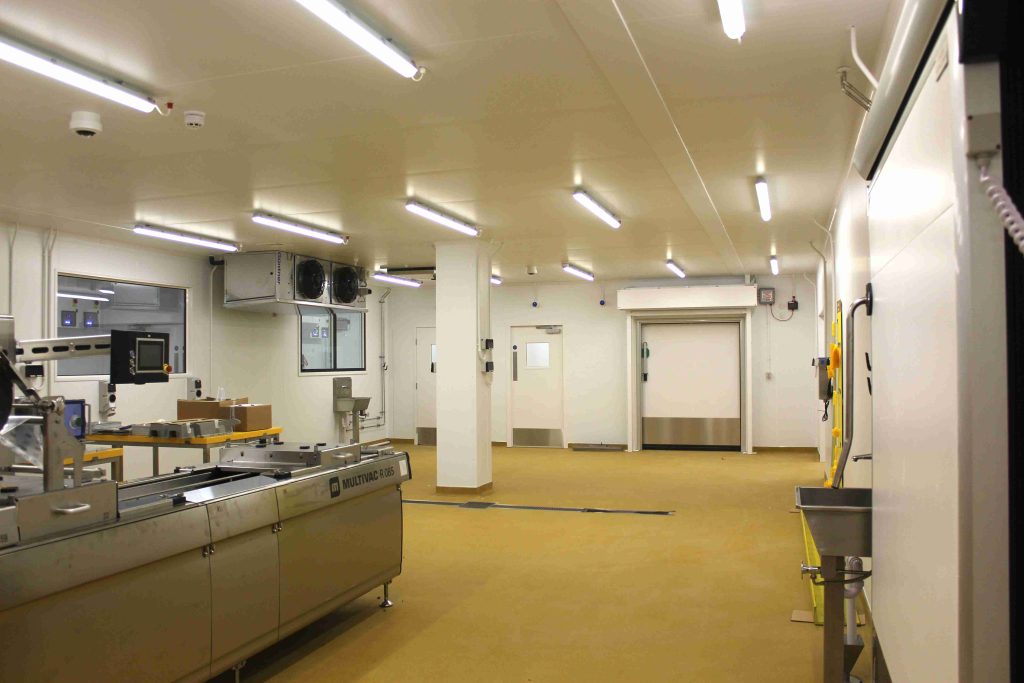
What does this look like in food manufacturing? A turnkey process means everything is streamlined from the start:
- We design your facility layout around how your production actually flows.
- Your future sustainability and growth goals are taken into account.
- BRCGS and SALSA accreditations are adhered to.
- Our in-house design team can provide advice based on food industry knowledge.
- Every contractor team on-site is managed by us.
- All work is carried out by experienced food-industry-specific contractors.
- We install and commission everything properly.
- You receive full documentation when we hand over the keys.
- We then support you with a planned and preventative maintenance package for your new facility.
You’re not trying to coordinate several different vendors and hope everything fits together. You’re getting a single, unified solution, working together as a single, experienced food industry design-and-build team.
Why Do Food Businesses Keep Going Turnkey?
Timescales and budget accuracy are two factors that can make or break your upcoming factory expansion project. Delays on-site don’t just push back opening day; they hand competitors a head start in capturing market share. Not enough time put into the design phase? This can lead to operational inefficiencies that cost money every single day for years.
Choosing a turnkey approach helps businesses avoid these traps in several concrete ways.
Working With One Team Instead of Many
Still wondering what is turnkey and why it matters? Coordinating contractors can be hard. Acting as a middleman between architects, surveyors, engineers and suppliers wastes time that could be better spent on building your business. Turnkey execution puts one company in charge, so the buck stops with us and the project stays on track.
Finishing Faster Without Cutting Corners
When the same partner designs and builds the facility, work moves differently. Planning mistakes are caught early in design reviews. Materials arrive when crews are ready. Work follows a logical schedule.
Understanding Costs From the Start
To explain turnkey project budgeting: Budget transparency starts with initial planning. We design to your budget, so mid-project design changes and costly delays rarely occur.
Compliance That’s Not an Afterthought
Food manufacturing facilities face strict regulations. Experienced turnkey providers address compliance requirements from the start, avoiding issues later.
How Does This Approach Support Business Growth?
Well-planned facilities become solid business infrastructure. Good layouts make scaling easier without major disruptions.
Turnkey-delivered facilities commonly provide:
- Minimised material waste and operational downtime
- Effective health and safety management systems
- Improved investment returns through built-in operational efficiency
- Manageable maintenance of the facility
Choosing the Right Turnkey Partners
Provider capabilities vary significantly across the industry. What is a turnkey solution worth if the provider lacks food industry experience? Not much. You should focus on:
- Demonstrated food industry project experience, not a generic construction background
- Substantial in-house design and build competency
- Working knowledge of food safety regulatory requirements
- Capability spanning both construction oversight and integrating your process flow
- Transparent communication practices, realistic timeline and budget projections
- The ability to de-risk your project to ensure your budget is adhered to.
The right partners build facilities that support your business growth, not just provide a building.
Conclusion
Developing a food production facility is challenging, but with proper planning and expert support, the process becomes manageable and predictable.
Theturnkey approach removes this complexity from your plate. You get expert oversight of every phase, from design through construction to handover. No vendor juggling, no integration nightmares, just a clear path to a fully operational facility ready for production.
Frequently Asked Questions
What defines a turnkey project in a manufacturing context?
A turnkey project means one company handles everything: planning, design, construction, fit-out, commissioning and handover. You get a finished, fully functional facility ready to start production immediately.
Are turnkey solutions appropriate for small-scale food businesses?
Yes, across business sizes. The approach benefits both startup operations and established manufacturers, as simplified planning and reduced operational risk apply universally regardless of production scale.
Does turnkey execution require higher investment than traditional management approaches?
Not necessarily when examining total project costs. While initial proposals may appear higher than separate contractor estimates, turnkey delivery typically reduces overall expenditure by preventing schedule delays, eliminating design-related rework and avoiding coordination failures that inflate final costs.
What is the timeline for turnkey food facility projects?
Duration varies based on facility scale, automation requirements and regulatory approval complexity. However, integrated planning and execution typically accelerate completion compared to multi-vendor coordination, as synchronised activities compress overall project duration.
Related Content
What Is Resin Flooring and Why It’s Perfect for Your Floors
Anyone who has spent time inside a working food factory knows the floor is far more than something you walk on. It’s where spills land, heavy loads get dragged, cleaning crews work through the early hours and hygiene auditors cast their most critical eye. A floor that can’t keep up doesn’t just create a maintenance headache, it puts your whole operation at risk.
What does the construction phase of a turnkey project look like?
If you are confident in our turnkey approach and happy with the design, we can then proceed with the building and fitting out of your new food factory according to the detailed design. This enables you to completely step back from the project, allowing you to focus on running and growing your business, knowing it’s in safe hands.
The importance of aligning food certification requirements when planning and designing the build of a new factory facility
If you don’t think turnkey is the correct route for your upcoming expansion project, you will need to bear in mind who will take on the role of principal designer and contractor. This is an important factor as this will expose you to risk including ensuring your new factory facility is built to the requirements of necessary food certifications such as BRC and SALSA.